Profit
TikTok Shop profit: what beginners should count before calling a product good
Profit is not the same as sales. For a TikTok Shop product test, the useful number is what is left after the order loses product cost, fees, creator commission, ad spend, shipping support, and return reserve.
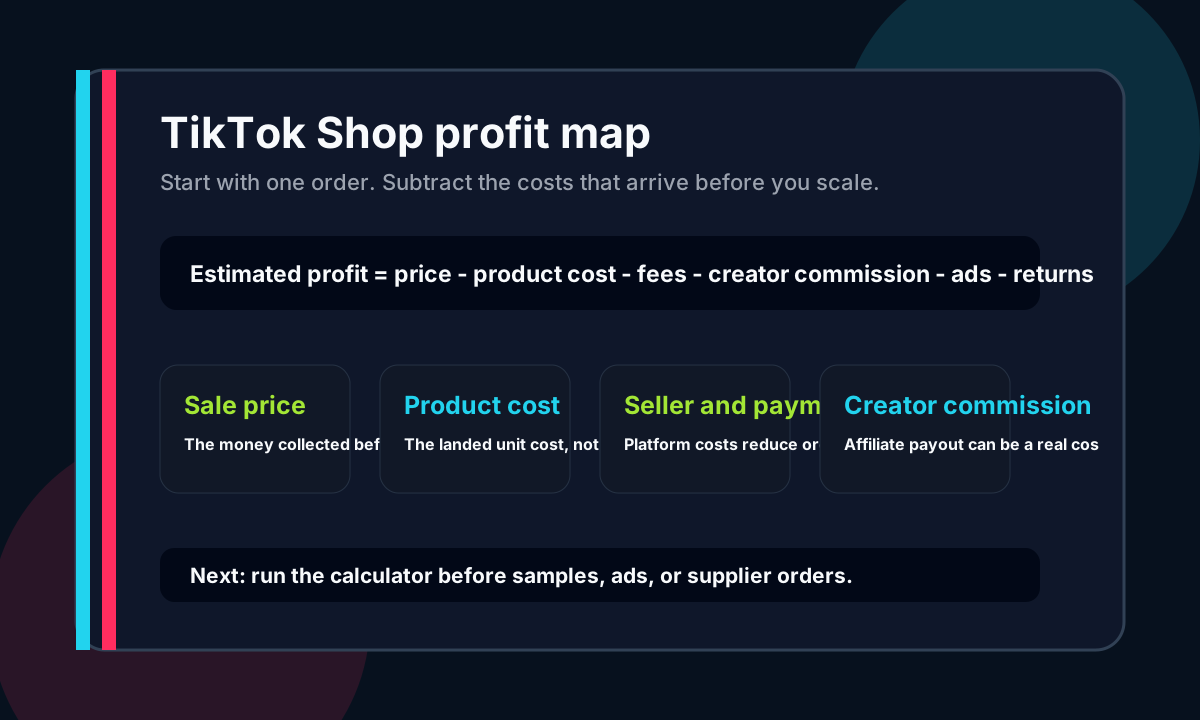
What belongs in a profit check
| Line item | Why it matters | Beginner mistake |
|---|---|---|
| Sale price | The money collected before costs. | Copying competitor price without knowing cost room. |
| Product cost | The landed unit cost, not just the supplier listing. | Ignoring packaging, freight, or prep cost. |
| Seller and payment fees | Platform costs reduce order room. | Using a fee guess from an old video. |
| Creator commission | Affiliate payout can be a real cost per order. | Offering a cut before checking margin. |
| Ad spend | Paid testing needs room even if organic content is the goal. | Counting revenue from paid orders as pure profit. |
| Return reserve | Refunds and replacements hit after the first sale. | Waiting for returns before modeling them. |
A simple decision rule
Estimated profit = price - product cost - fees - creator commission - ads - returns
If the product only works when every assumption is perfect, skip it or change the offer. If it still has room after realistic costs, test a small batch and track what happened.
Sources to check before acting on this idea
Use these sources for live platform guidance and research context. Then use ShopROAS for your own product math.
Source: TikTok Shop Academy
Seller operations and marketplace guidance
Use this before changing seller-rule or fee assumptions.
Open source
Source: TikTok Business Help Center
Ad setup and campaign references
Use this when paid traffic is part of the profit model.
Open source
Source: Shopify
Profit margin calculator reference
Useful for understanding basic ecommerce margin math.
Open source