Margin
TikTok Shop profit margin: the beginner formula that actually helps
Profit margin is the percent of the order that survives after costs. It is useful because it turns one messy product idea into a simple question: does this product have enough room for fees, creators, ads, and returns?
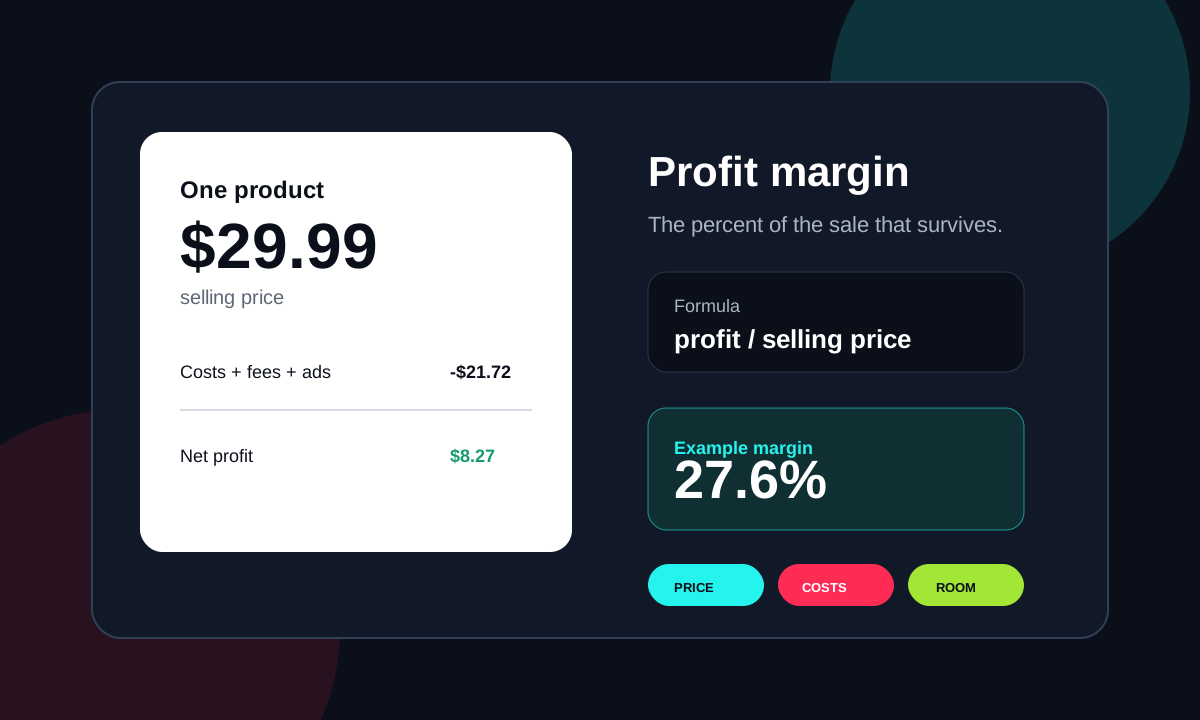
The useful formula
The hard part is not the division. The hard part is entering real costs. If you only subtract supplier cost, almost every product looks better than it is.
Costs to include
| Cost | Why it belongs in the margin |
|---|---|
| Product cost | The landed cost of the unit, not just the supplier listing price. |
| Shipping and packaging | Small costs become painful on low-ticket products. |
| Seller and payment fees | The order loses this before you see usable profit. |
| Creator commission | A good affiliate offer can sell, but it has to fit the margin. |
| Ad spend | Paid testing needs room even if organic content is the goal. |
| Return reserve | Refunds and replacements are part of the first test, not a surprise later. |
What a beginner should do with the number
If the margin is thin, do not force the product. Raise the price, reduce landed cost, lower the creator cut, or compare it with another product. If the margin survives realistic inputs, then run a small test and track what actually happened.
Sources to check before setting assumptions
Use official platform sources for live rules and broad ecommerce references for pricing basics. Then use ShopROAS to model your own product.
Useful for understanding the basic ecommerce margin formula.
Open sourceUse this before changing TikTok Shop fee or seller-rule assumptions.
Open source