Pricing
How to price a TikTok Shop product
Start with the order math before you look at competitor prices. A low price can make a product easier to sell, but it can also leave no room for creators, refunds, ads, or a bad first batch.
Use this pricing floor
This is not your final price. It is the line where the product stops being interesting. If the market price sits below this floor, you need a cheaper supply source, a bundle, a higher perceived value angle, or a different product.
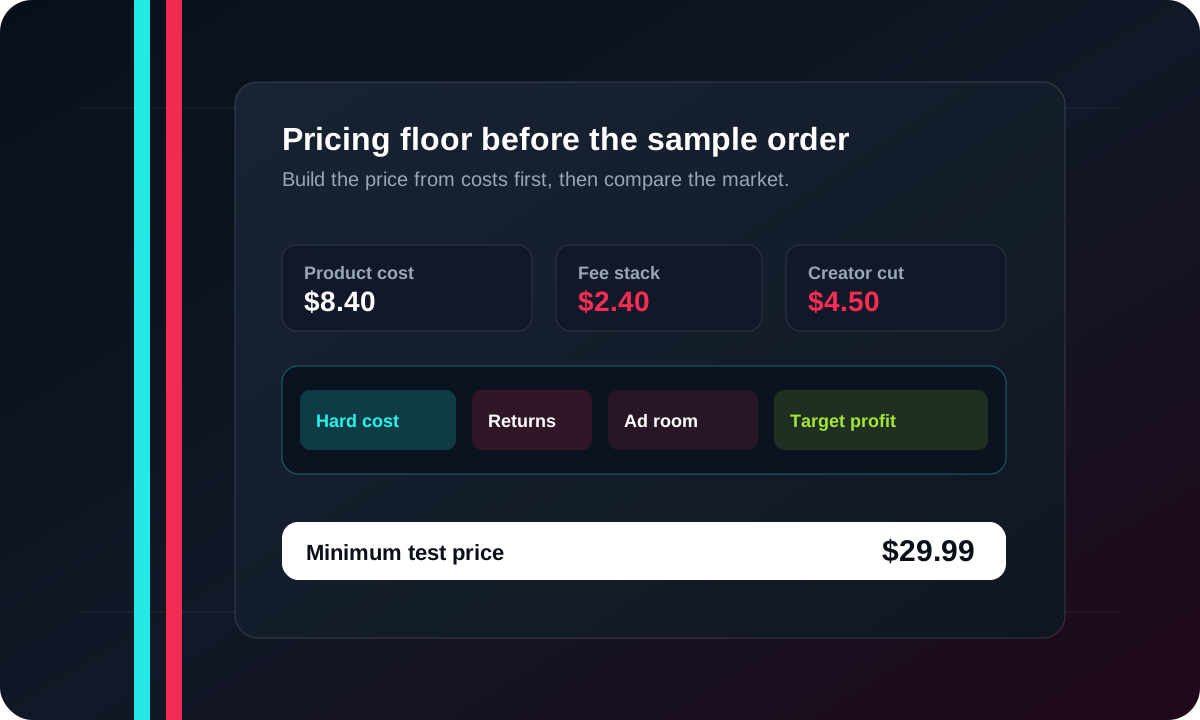
Price from three checks
| Check | Question | Bad signal |
|---|---|---|
| Margin | Can one order stay profitable after realistic costs? | Profit only appears when ads and returns are set to zero. |
| Creator cut | Can you offer enough commission to get attention? | A 10% cut already breaks the product. |
| Market fit | Does the price feel believable for the category? | You need luxury pricing for a commodity item. |
A cleaner way to test price
Test the first batch with a price that leaves room for a mistake. If the product only works at the lowest possible price, you are asking a small account to win on volume before it has proof.
Video references and pricing sources
These are reference sources, not endorsements. Watch them for the platform mechanics, then come back to the calculator and run your own cost stack.
Useful for checking how TikTok explains listings, seller setup, and product operations.
Good background when you want a plain ecommerce view before adapting the math to TikTok Shop.
Sources to check before launch
Use competitor prices as a market signal, not as proof that your cost structure works. Verify fee and promotion rules before committing to a final launch price.