Seller fees
How much does TikTok Shop take?
New sellers usually ask this as one question, but the answer is a stack. TikTok Shop may take a platform fee. Payment processing can take another slice. Then creator commission, coupons, shipping subsidy, returns, and ads can make the order much thinner.
Think in cost buckets, not one fee
| Bucket | What to check | Where it shows up |
|---|---|---|
| Seller/platform fee | Current category and seller rules | Marketplace cost |
| Payment fee | Percentage plus any fixed payment cost | Each paid order |
| Creator commission | Affiliate cut you offer | Creator-driven sales |
| Promo cost | Coupons, discounts, shipping subsidy | Campaigns and offer tests |
| Return reserve | Refunds, damaged items, replacements | After the sale |
A clean starter formula
That number is not profit yet. You still need to subtract product cost, packaging, freight, and ads. If the order is already thin before product cost, the product is usually not a good beginner test.
Quick example
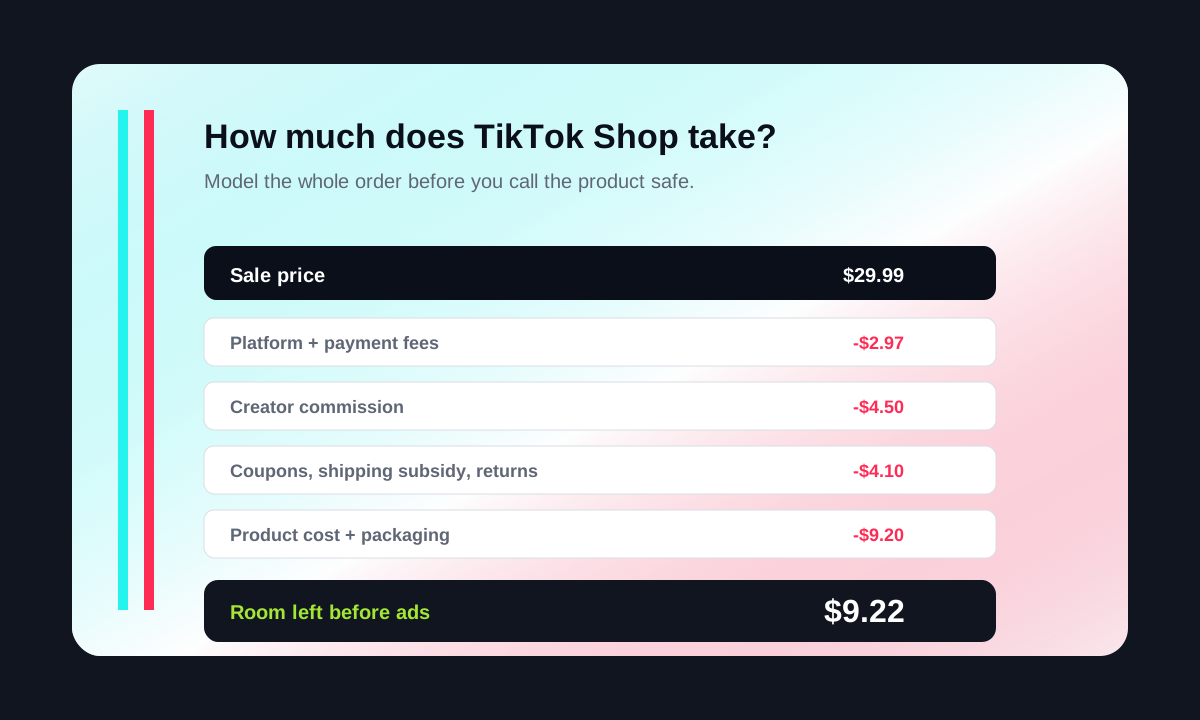
| Sale price | $29.99 |
| Estimated selling costs | -$11.57 |
| Product cost and packaging | -$9.20 |
| Room left before ads | $9.22 |
This is a fictional example for planning. The point is the workflow: enter the live fee assumptions, model the whole order, then decide whether the product has enough room for a small test.
Sources to check before modeling fees
Use official seller and ads documentation for current rules. Use ShopROAS for the math after you have the inputs.
Check current marketplace lessons and seller policy updates before changing fee assumptions.
Open sourceUse this when you add paid traffic to the order model.
Open source